
Overview
Description
About
Frimley
Arlington, 22202-4208, VA
United States
Latest press releases
Sensor system delivered for full assembly of U.S. Space Force satellite intelligence and defense payload
BROOMFIELD, Colo., May 15, 2026 /PRNewswire/ -- BAE Systems (LON: BA) has delivered the sensor subassembly and sensor system controller components for the Next Generation Overhead Persistent Infrared Polar (NGP) program. The program will provide the U.S. Space Force with advanced missile warning, technical intelligence and battlespace characterization mission capabilities.
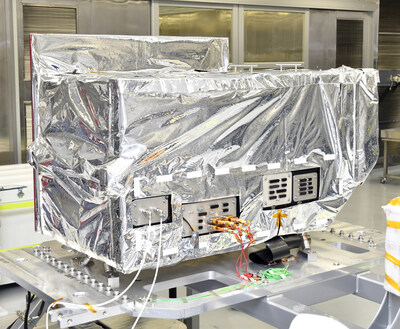
This milestone delivery keeps the program on track for full assembly of the payload, known as Flight Unit 1, expected to launch in 2028.
"We met multiple challenges across a multiyear timeframe to successfully deliver our components for the next stage of full payload assembly," said Thai Sheridan, vice president and general manager of Military Space for BAE Systems Space & Mission Systems. "This program will provide essential next-generation defense and intelligence capabilities for the Space Force."
The sensor subassembly built by BAE Systems is a significant component of the mission payload and provides the optics, pointing mechanism, controlling electronics and electrical bus interface to the spacecraft.
The sensor system controller interfaces directly to the space vehicle to receive commands and provide telemetry data for the mission. It provides power control and conversion for sensor assembly components as well as high-accuracy mirror direction.
The BAE Systems hardware originally was designed for use with the geosynchronous Earth orbit (GEO) element of the program. Featuring a highly adaptable design, the components were able to be repurposed for the NGP mission, allowing the program to meet challenging schedule needs.
BAE Systems is building a second flight unit for the NGP mission, which is on schedule for delivery in support of an expected launch in 2030.
For more information, please contact:
Brian Rantala, BAE Systems
Mobile: 720-995-8253
brian.rantala@baesystems.us
www.baesystems.com/en-us
@BAESystemsInc

 View original content to download multimedia:https://www.prnewswire.com/news-releases/bae-systems-delivers-next-generation-flight-hardware-for-us-space-force-missile-warning-program-302773612.html
SOURCE BAE Systems, Inc.

Rapid avionic test shop enhances efficiency, reduces downtime, and boosts fleet readiness
SAN DIEGO, May 14, 2026 /PRNewswire/ -- BAE Systems (LON: BA) has completed the successful development and integration of an upgraded Link 16 test capability for Multifunctional Information Distribution System Joint Tactical Radio System (MIDS JTRS) terminals on U.S. Air Force F-16 aircraft. This upgrade streamlines the maintenance process, allowing aircraft to return to operation faster.

The new automated test solution is now integrated on the Versamodule Extensions for Instrumentation Improved Avionics Intermediate Shop (VXIIAIS) and the Rackmount Improved Avionics Intermediate Shop (R-IAIS), which enables the rapid on-site validation of MIDS JTRS at customer bases.
"This enhanced Link 16 test capability on the R-IAIS system marks a major milestone in our efforts to support the U.S. Air Force's modernization efforts," said Meg Redlin, product line director for Advanced Mission Solutions at BAE Systems. "Providing more fidelity in testing with tactical navigation functions will enable U.S. forces and allies to rapidly diagnose failures and validate the operational status of their MIDS JTRS terminals on-site, increasing the availability of their aircraft and reducing maintenance downtime."
MIDS JTRS provides situational awareness and enables Link 16 connectivity with jam-resistant, line-of-sight voice, video, and data communications for sea, ground, and air assets. This rapid solution offers greater performance to the previous MIDS - Low Volume Terminal test for F-16 aircraft.
BAE Systems provides emulators and software for the avionics shop to use when testing the MIDS JTRS terminal. In turn, that technology passes information to the aircraft maintainers to accurately diagnose and verify repairs. It also enables them to do on-site testing while improving line-replaceable recovery rates and decreasing the need to purchase additional parts.
Link 16 is a standardized communications system used by NATO, the U.S., and its allies to share encrypted real-time tactical data. MIDS JTRS is a four-channel software-defined radio designed to run the complex Link 16 waveform and up to three additional communication protocols. It is a scalable and flexible solution to tailor networks to mission needs. Tactical Targeting Networking Technology offers a low latency, high communications capability that provides critical platform connectivity and throughput within contested environments. The Department of War is fielding MIDS JTRS on the F-15, F-16, F/A-18, and F-22 aircraft, as well as ship and command and control assets.
BAE Systems has designed and manufactured comprehensive test solutions for both military and commercial applications for 45 years, delivering more than 700 stations. Fielded in 25 countries, these unique and flexible offerings provide organizational, intermediate, and depot-level support for electronic warfare, display, radar, communications, stores management, and flight and fire control systems.
Work on the upgraded Link 16 automatic test equipment takes place at BAE Systems' San Diego, California and Wayne, New Jersey facilities.
For more information, please contact:
Paul Roberts, BAE Systems
Mobile: 603-521-2381
paul.a.roberts@baesystems.us
www.baesystems.com/en-us
@BAESystemsInc
 View original content to download multimedia:https://www.prnewswire.com/news-releases/bae-systems-provides-advanced-aircraft-readiness-with-new-link-16-test-capability-for-f-16-302772433.html
SOURCE BAE Systems, Inc.
