
Overview
Description
About
11 Bermudiana Road
Bethesda, 20817, MD
United States
Latest press releases
Sanctum™ C‑UAS, GRIZZLY™ Containerized Launcher and JAGM Missile successfully integrated and was delivered in under 45 days to defeat Group 3 one-way attack drones.
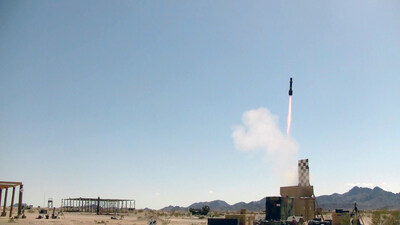
BETHESDA, Md., June 3, 2026 /PRNewswire/ -- Lockheed Martin (NYSE: LMT) successfully intercepted a Group 3 one-way attack test drone using a Joint-Air-to-Ground Missile (JAGM) launched from a GRIZZLY™ containerized launcher for the first time. Sanctum Counter-Unmanned Aerial System (C-UAS) battle manager and Fortem R-40 Radars were used for the successful detection, tracking and engagement of the drone target.
THE BIG PICTURE
Sanctum's sensors detected and tracked a hostile Unmanned Aerial Vehicle (UAV), the Sanctum mission management software processed the engagement, and the GRIZZLY launcher fired a JAGM missile neutralizing the target. With integration of hardware-in-the-loop and live-fire testing completed in under 45 days, this event highlights Lockheed Martin's ability to demonstrate an end‑to‑end solution with speed, agility and affordability — critical attributes in today's rapidly evolving drone-threat environment.
Built on existing prototype architecture, GRIZZLY enables users to employ the ready-to-fire Sanctum C-UAS system without extensive infrastructure and logistical footprints. By integrating advanced sensor, battle management and missile technologies, Lockheed Martin delivers a decisive C-UAS capability that aligns with our customers' needs for agile and distributed lethality.
WHY IT MATTERS
- Scalable Detection & Deployment: Small footprint radar sites with distributed sensors offer configurable coverage options. Containerized launcher can be mounted on ground sites or maritime platforms, supporting distributed operations with minimal logistical footprint.
- Distributed Connectivity: Wireless communication solution between radars, battle management and launcher allows for rapid and agile deployment.
- Affordable Lethality: Low-cost, commercial sensors, toolless reload and eight-round capacity reduces sustainment expenses while maintaining high-volume firepower.
- End-to-End Multi-Mission Capability: Radar, battle management, proven-weapon container and existing layered effectors integrated through Sanctum C-UAS Battle Management software for a complete kill web against group 1-4 UAV threats. This integration will protect forward operating bases, critical assets and maritime platforms.
- JAGM Layered Defense: JAGM's dual‑mode seeker (SAL/MMW), combined with its C-UAS capability, provides a cost-effective effector that can be rapidly deployed from a multi-missile launcher across a variety of domains, providing enhanced layered defense to protect high‑value assets.
EXPERT PERSPECTIVES
"The ability to integrate GRIZZLY's proven launch architecture with Sanctum's battle manager on an accelerated timeline demonstrates how Lockheed Martin is applying battlefield innovation and cross-program collaboration to rapidly deliver layered defense capabilities to the warfighter," said Randy Crites, vice president and general manager of Lockheed Martin Advanced Programs. "This test demonstrated a modular, affordable point-defense solution that can be quickly scaled and deployed across multiple domains to counter evolving threats."
"This test demonstrates a rapid, low-cost and modular point-defense solution that can be deployed on land or maritime platforms within days," said Paul Lemmo, vice president and general manager of Lockheed Martin Sensors, Effectors and Mission Systems. "The demonstrated kill chain can operate standalone or integrated with higher echelon command and control systems through the Sanctum mesh network, showing our commitment to meet our customers' toughest missions."
About Lockheed Martin
Lockheed Martin is a global defense technology company driving innovation and advancing scientific discovery. Our all-domain mission solutions and 21st Century Security® vision accelerate the delivery of transformative technologies to ensure those we serve always stay ahead of ready. More information at Lockheedmartin.com.

 View original content to download multimedia:https://www.prnewswire.com/news-releases/lockheed-martin-demonstrates-first-ever-sanctum-c-uas-launch-from-grizzly-containerized-launcher-302789224.html
SOURCE Lockheed Martin

New 88,000-square foot facility expands advanced manufacturing capacity and supports rapid delivery of homeland defense capability.
COURTLAND, Ala., June 1, 2026 /PRNewswire/ -- Lockheed Martin (NYSE: LMT) today inaugurated an 88,000-square foot, purpose-built Missile Assembly Building 5 (MAB-5) in Courtland, Alabama. The state-of-the-art plant will produce the Next Generation Interceptor (NGI) for the Missile Defense Agency (MDA) and bolster the nation's layered missile defense architecture.

MAB-5 consolidates Lockheed Martin's most sophisticated digital manufacturing tools and smart processes, enabling high efficiency, repeatable production. The plant draws best practices from high-reliability programs like Terminal High Altitude Area Defense (THAAD) and hypersonics and adopts a "digital twin" methodology that reduces risk from design through sustainment. Automation and data driven workflows guarantee consistent, high-quality output.
By bringing together digital engineering and modern manufacturing techniques, this facility is designed to accelerate production while maintaining the highest standards of quality and reliability.
In a statement, Director of Golden Dome for America Gen. Mike Guetlein, who leads the Department of Defense's effort to develop a next-generation missile defense shield, hailed the facility as a critical asset to national security.
"You are not just building infrastructure, you are building the Arsenal of Freedom," Gen. Guetlein said. "We are moving with purpose, with urgency, and we are moving out…we are forging the shield to secure the Homeland together."
Smarter, More Agile Defense
NGI is an open system interceptor that meshes seamlessly with a layered defense network of space-based sensors, radars, command and control systems and other interceptors.
"Think of this as deterrence through defense," said Christopher Jewell, NGI vice president and program manager at Lockheed Martin. "It sends a clear signal that threats can be detected, tracked and defeated before they ever reach their intended target."
Its modular architecture also allows rapid incorporation of new technologies. Unlike legacy systems, NGI upgrades can be performed while the missile remains in its silo, avoiding costly removal and replacement.
"NGI was designed from the start to adapt," added Jewell. "Its digital foundation allows new technologies to be integrated more quickly, ensuring the system can stay ahead of emerging threats."
Real Progress Underway
"Golden Dome for America is real, and it is not theoretical. We are building it right now in Courtland," Gen. Guetlein said. "We are taking proven, world-class capabilities, combining them with next-generation space-based tracking and advanced interceptors, and fusing them together with Artificial Intelligence."
Supporting that momentum, NGI is moving from design to production, with key elements of the system advancing through development test and integration. Core technologies, including the interceptor's engagement capability, sensors, software and propulsion, are demonstrating system-level performance and operation ahead of Critical Design Review (CDR).
MAB-5 will streamline workflows, cut unnecessary handling and support tighter tolerances required for complex components. Integrated digital tools link design data directly to the factory floor, bolstering configuration control, quality assurance and repeatability as production scales.
"These facilities were intentionally designed around the system they produce," Jewell said. "By aligning the factory to the product at the onset of development, we can improve quality, increase efficiency, adapt and ramp up production quicker as the system evolves."
Continued Investment in Alabama
The opening of MAB 5 underscores Lockheed Martin's longstanding commitment to North Alabama as a hub for deterrence and defense. The company has been present in the region since 1963 and has been producing defense systems in Courtland since 1994.
Lockheed Martin's Troy, Alabama, facility will also support NGI production through hardware integration and large-scale manufacturing. Together, the Troy and Courtland campuses form the core of the company's commitment to national missile defense readiness.
"The talent in north Alabama is the engine behind the next generation of our nation's defense systems, and this project will create high-skill jobs and new career pathways while strengthening our local economy," said U.S. Rep. Dale Strong. "This state-of-the-art facility will play a major role in protecting our homeland as well as reshaping Courtland's role as a steady source of quality jobs and growth for the Tennessee Valley."
About Lockheed Martin
Lockheed Martin is a global defense technology company driving innovation and advancing scientific discovery. Our all-domain mission solutions and 21st Century Security® vision accelerate the delivery of transformative technologies to ensure those we serve always stay ahead of ready. More information at www.Lockheedmartin.com.

 View original content to download multimedia:https://www.prnewswire.com/news-releases/lockheed-martin-opens-next-generation-interceptor-facility-in-courtland-alabama-302787414.html
SOURCE Lockheed Martin
